Coffee grows in a band around the equator, roughly between the tropics of Cancer and Capricorn, often called the coffee belt. Within that belt, every region has its own mix of altitude, soil, rainfall, plant varieties and farming traditions. Those differences show up in your cup as clearly as grapes do in wine, which is why a bag that says "Ethiopia" and one that says "Brazil" can taste like two different drinks.
What actually changes the flavor
- Altitude. Cooler nights at high elevation slow the coffee cherry's ripening, which generally means denser beans with more sugar and brighter acidity. Lower-grown coffee tends to be softer and rounder.
- Processing. After picking, the seed has to come out of the fruit. Washed coffees have the fruit removed before drying and usually taste clean and crisp. Natural (dry) coffees dry inside the whole cherry and often taste fruitier and heavier. Honey or pulped-natural coffees sit in between.
- Variety. Just like apples, coffee plants come in many varieties with different flavors and yields.
- Roast. A light roast keeps more of the origin's character; a dark roast pushes everything toward roasty, bittersweet flavors. Roast can matter as much as origin, so compare coffees at a similar roast level.
Colombia: balanced, sweet and fruity
Colombia grows coffee along three branches of the Andes, mostly on small family farms where cherries are picked by hand. Most Colombian coffee is washed, which gives it a clean, balanced cup: caramel sweetness, gentle red fruit and a medium body. The southern regions, like Huila, Nariño and Cauca, are known for brighter, fruitier coffees. Many areas have two harvests a year, so fresh crop arrives often.
Brew it: pour-over or drip at 1:16. Try No. 01 Cherry Sierra, a single origin from Huila and Cauca with cherry, plum and chocolate notes.
Brazil: nutty, chocolatey and low in acidity
Brazil has been the world's largest coffee producer for well over a century. Much of it grows on wide, relatively low plateaus such as the Cerrado and southern Minas Gerais, and a lot of it is natural or pulped-natural processed and dried in the sun. The result is a round, nutty and chocolatey cup with low acidity and a heavy body, which is why Brazil is the backbone of so many espresso blends.
Brew it: French press, moka pot or espresso; it loves milk. Try No. 07 Cerrado Ember for a dark, bittersweet roast, or taste Brazil as the base of No. 03 Almendra and No. 05 Sierra Cocoa.
Ethiopia: floral, citrusy and berry-like
Ethiopia is the birthplace of arabica coffee, and wild coffee still grows in its southwestern forests. Much of it comes from smallholders growing a huge diversity of local "heirloom" varieties at high altitude. Washed Ethiopian coffees (from regions like Yirgacheffe and Sidama) are famous for jasmine-like florals, lemon and a tea-like body. Naturals can taste strikingly of blueberry and strawberry.
Brew it: light roast, pour-over or iced pour-over, black. Try No. 08 First Bloom, a light blend led by Ethiopian coffee that's lovely over ice.
Guatemala: cocoa, toffee and a little spice
Guatemala's coffee grows in highland regions shaped by volcanoes, including Antigua, Huehuetenango and the slopes around Lake Atitlán. Volcanic soils, altitude and a lot of shade-grown coffee combine into a cup that's often described as chocolate, toffee and gentle spice, with a bright but balanced acidity. It's a great "step up" origin for people who like classic coffee flavor but want a bit more sparkle.
Brew it: drip, pour-over or a big-batch carafe. Guatemala is part of No. 02 Four Winds and No. 04 Tres Ríos.
Mexico: light, nutty and easygoing
Most Mexican coffee comes from the southern states of Chiapas, Oaxaca and Veracruz, frequently from small family farms growing under the shade of taller trees. Mexican coffees tend to be light to medium in body, with nutty, cocoa and soft citrus notes and a gentle acidity. They're easy to drink black and pair well with other origins, which is why you'll find Mexico in plenty of blends.
Brew it: any method; try it in a French press for extra body. Mexico adds maple-like depth to No. 03 Almendra and clean sweetness to No. 08 First Bloom.
Sumatra (Indonesia): earthy, herbal and full-bodied
On the Indonesian island of Sumatra, many farmers use a local method called wet hulling: the coffee is hulled while it's still damp instead of being fully dried first. That gives Sumatran coffee its signature profile: earthy, herbal and savory, with a heavy, syrupy body and very low acidity. People tend to either love it or find it unusual, so it's a great origin to taste side by side with a bright Ethiopian.
Brew it: French press or pour-over at a medium grind; it's also excellent in the evening as decaf. Try No. 09 Monsoon Hush, a mellow water-process decaf from Sumatra.
Single origins vs blends
A single origin comes from one country (sometimes one region or farm) and shows off that place's character. A blend combines origins on purpose: Brazil for body and chocolate, Colombia for sweetness, Ethiopia for a bright top note. Blends aren't "lesser" coffee; they're how roasters build balance and consistency. If you want to learn origins, taste a single origin first, then a blend that contains it, and see what the other coffees add.
Origins at a glance
| Origin | Typical flavors | Body · acidity | Try it as |
|---|---|---|---|
| Colombia | Caramel, red fruit, cocoa | Medium · medium | Pour-over, drip |
| Brazil | Nuts, chocolate, brown sugar | Full · low | French press, espresso, with milk |
| Ethiopia | Florals, citrus, berries | Light · bright | Light roast pour-over, iced |
| Guatemala | Cocoa, toffee, spice | Medium · balanced | Drip, carafe |
| Mexico | Nuts, cocoa, soft citrus | Light-medium · gentle | Any method |
| Sumatra | Earthy, herbal, cedar | Heavy · very low | French press, evening decaf |
How to explore origins at home
- Buy two contrasting bags. Ethiopia and Brazil is the classic pair: bright and floral versus round and chocolatey.
- Brew them the same way. Same ratio, grind and water, so the only difference is the coffee. Our brew timer keeps the pours identical.
- Taste side by side as they cool. Flavors open up as the coffee drops from hot to warm. Our guide on how to taste coffee walks you through it.
- Write down what you notice. A brew log helps you spot what you like: origin, roast or method.
Want the tour delivered? Every coffee in our club has its own origin guide with a map and recipe:
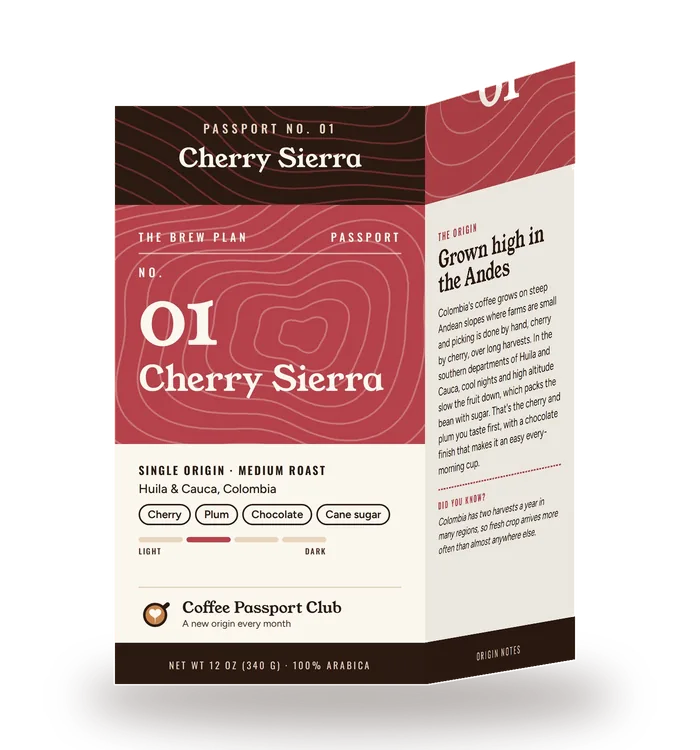 No. 01 · ColombiaCherry SierraMedium · Cherry, Plum
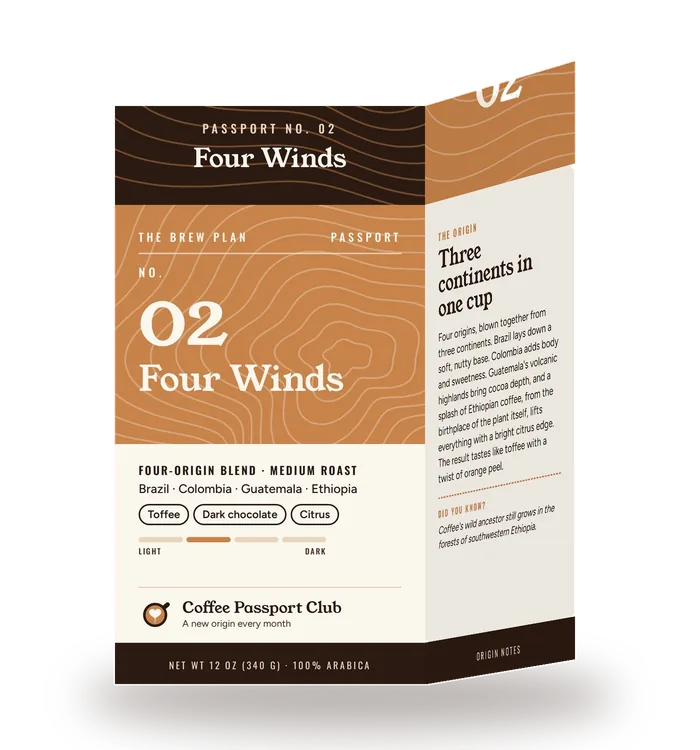 No. 02 · Brazil · Colombia · Guatemala · EthiopiaFour WindsMedium · Toffee, Dark chocolate
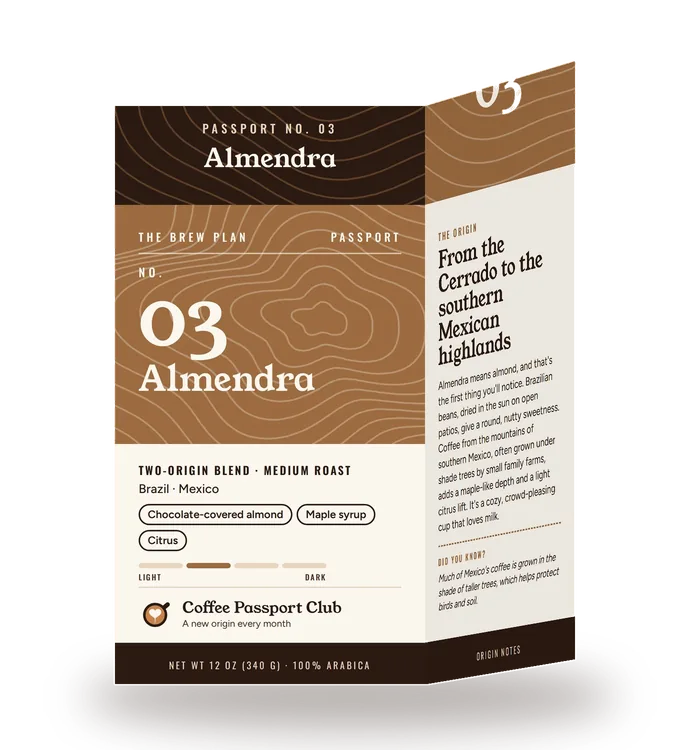 No. 03 · Brazil · MexicoAlmendraMedium · Chocolate-covered almond, Maple syrup
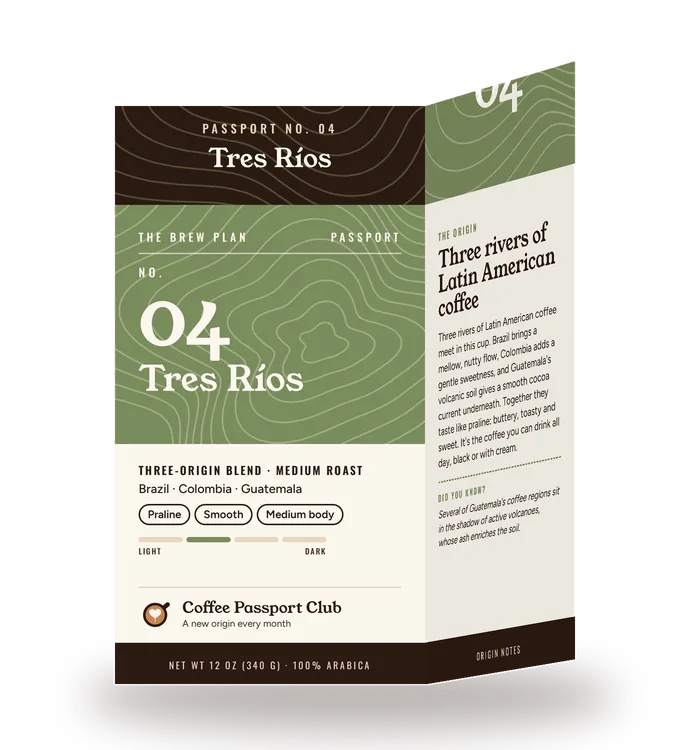 No. 04 · Brazil · Colombia · GuatemalaTres RíosMedium · Praline, Smooth
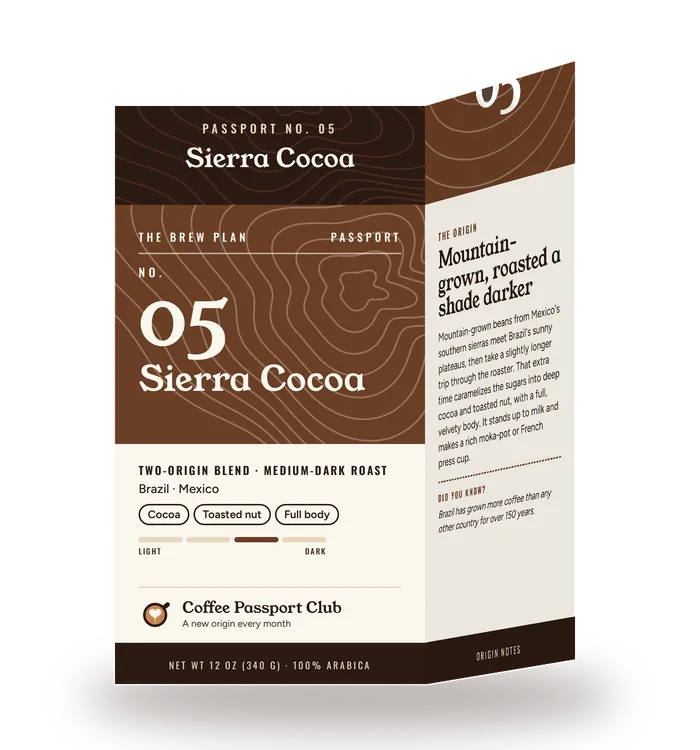 No. 05 · Brazil · MexicoSierra CocoaMedium-dark · Cocoa, Toasted nut
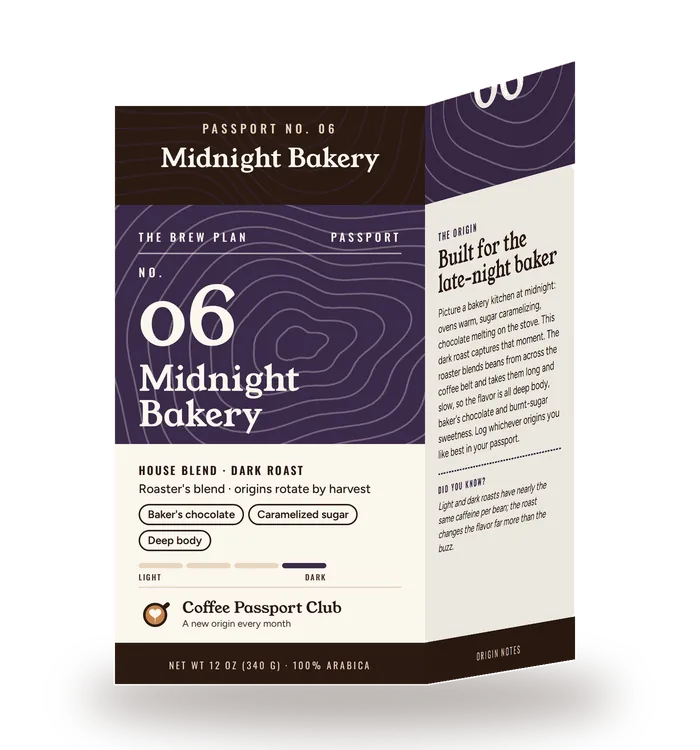 No. 06 · House blendMidnight BakeryDark · Baker's chocolate, Caramelized sugar
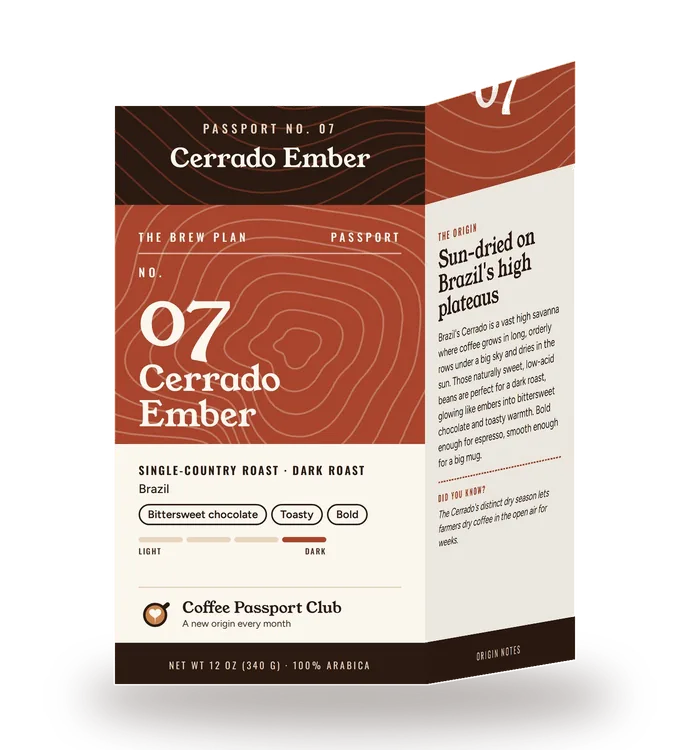 No. 07 · BrazilCerrado EmberDark · Bittersweet chocolate, Toasty
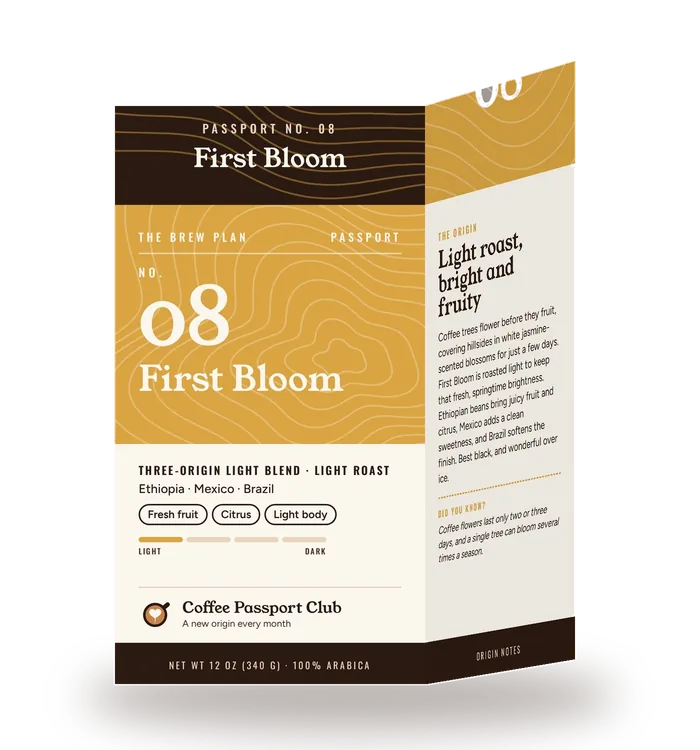 No. 08 · Ethiopia · Mexico · BrazilFirst BloomLight · Fresh fruit, Citrus
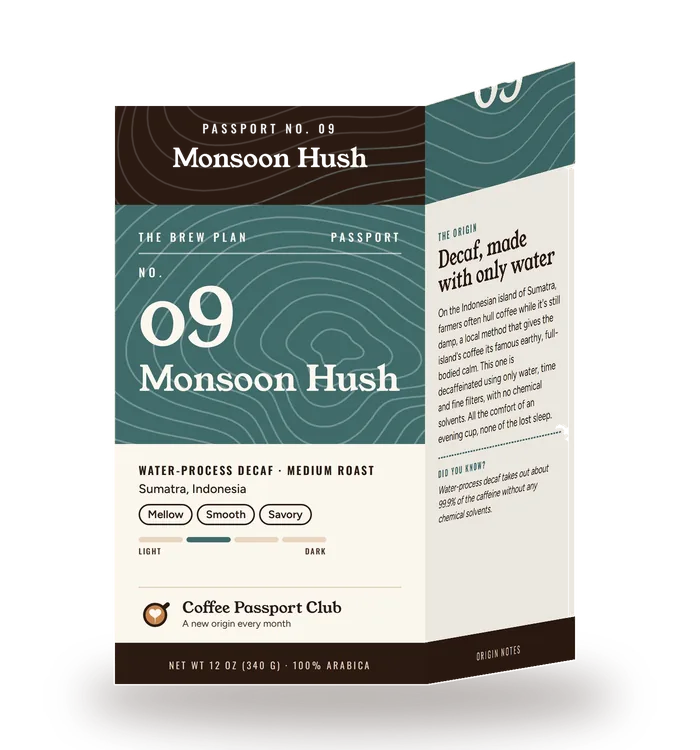 No. 09 · IndonesiaMonsoon HushMedium · Mellow, Smooth
Questions people ask
What is a coffee origin?
It's where the coffee was grown: usually a country, and sometimes a specific region or farm. Origin shapes flavor through altitude, climate, soil, plant variety and how the coffee is processed after picking.
Which coffee origin is the least acidic?
Brazil and Sumatra are known for low acidity. Brazilian coffee tends to be nutty and chocolatey, while Sumatran coffee is earthy and full-bodied.
What does Ethiopian coffee taste like?
Washed Ethiopian coffees are often floral and citrusy with a tea-like body; natural-processed ones can taste strongly of blueberries and strawberries. They shine as light roasts.
Is single origin coffee better than a blend?
Not necessarily. Single origins show off one place's character, while blends combine origins for balance and consistency. Many excellent espressos are blends.
Why does the same origin taste different from bag to bag?
Region, farm, variety, processing, harvest year and especially roast level all change the flavor, so two coffees from the same country can taste quite different.